How long can you live with congestive heart failure? If you typed that question into a search box in the middle of the night, I understand. I have asked it too, more than once, from a hospital bed. I am a two-time heart failure survivor, and I want to give you an honest answer.
The honest answer is this: no one can give you a number. Not a website, not a chart, and not me. What I can give you is what medicine says plainly, what happened to me, and why I believe you should never accept a number as your future.
The short version
- No one can tell you exactly how long you will live with congestive heart failure. It affects everyone differently.
- Heart failure cannot be cured, but it can be treated, and treatment can help you live longer with fewer symptoms.
- My advice: do not look at statistics. An average describes a crowd. You are one person.
- I survived three widow maker heart attacks. Twice my heart stopped. I am still here.
- Want your recovery, believe in it, and be grateful for it before you can see it. And do the work your care team gives you.
Why No One Can Tell You How Long You Can Live with Congestive Heart Failure
Britain’s National Health Service says it simply: heart failure “affects everyone differently.”1 What lies ahead for you depends on the type of heart failure you have, what caused it, and any other health conditions you live with.1
Those are things only your own cardiologist and care team can weigh, because they know your heart. So ask them directly. Ask what they see, what concerns them, and what you can do about it. You have every right to an honest conversation.
When someone does offer you a number, remember what it is. It is an average taken from a large group of people who are not you. It cannot see your will, your faith, the people who love you, or what you are going to do tomorrow morning.
What Medicine Says, Plainly
I will not hide the hard part. The American Heart Association says heart failure cannot be cured, but it can be treated.2 The National Library of Medicine says that even with treatment it usually gets worse over time, so most of us will need treatment for the rest of our lives.3
Now read the next part just as carefully. That same source says treatment can help you live longer with fewer symptoms.3 The NHS adds that treatment and lifestyle changes can help keep heart failure stable for many years.1
So the medical answer is not a countdown. It is a condition you manage every day, with real tools that make a real difference. I wrote about those tools in Living with Congestive Heart Failure.
Three Widow Makers: Why I Stopped Believing in Numbers
I have had three widow maker heart attacks. A widow maker is a heart attack caused by a blockage in the left anterior descending artery, the large artery that runs down the front of the heart.4 All three of mine were complete blockages.
I have searched for another reported case of someone surviving three of them. I have not found one. Maybe there are others. Even if there are a thousand more survivors out there, the odds of survival are slim.
There is more. My last two widow makers ended in sudden cardiac death. My heart stopped. Each time I was brought back, and each time what followed was heart failure and respiratory failure. The last time, it took just over 20 minutes to restart my heart. In 2017, I spent about three weeks on a ventilator in intensive care.
Surviving that once is a long shot. Surviving it twice is an even longer one.
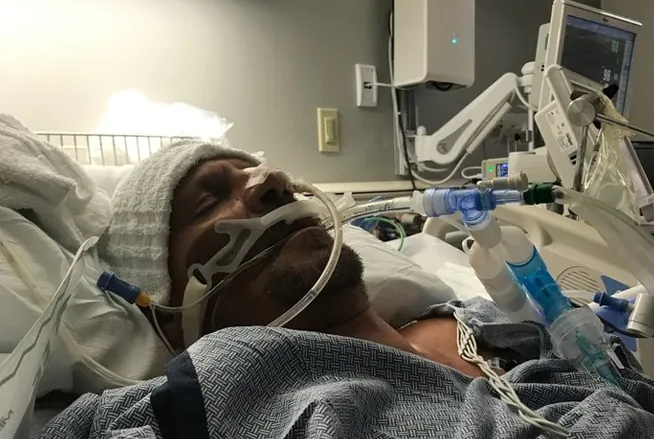
Today I live with Stage D heart failure, the last of the four stages, which the American Heart Association calls advanced heart failure.5 My ejection fraction is between 10 and 20 percent. Ejection fraction is how much blood the heart’s main pumping chamber pushes out with each beat, and the American Heart Association puts a normal one between 55 and 70 percent.6
I am not a statistic. Neither are you.
My Advice: Do Not Look at the Statistics
I recommend that you do not look at statistics. I mean that. Numbers about other people cannot tell you what your life will be, and they will fill your mind with the bad that could be.
Don’t focus on the bad that could be. Focus on the life ahead of you.
You survived for a reason. There is a purpose in it, and you need to find it now. I wrote about that search in Living with Purpose After Heart Failure.
You Never Know When God Will Put His Finger on the Scale
You never know when God is going to put His finger on the scale for you. Miracles still happen. My life is evidence of that.
I believe I am still here to tell you this: there is no end to miracles. Everything is possible. So don’t ever quit, and never give up.
I cannot promise you my outcome. No one can promise that. And if someone you love did not get more time, it was not because they wanted it less or believed less. What I can tell you is that your story is not finished while you are still here to live it.
Want It, Believe It, and Be Grateful
Three things carried me, and they are yours to use too.
You have to want it. Recovery does not arrive while you wait for it. Wanting it means getting up and doing the next small thing, even on the days when everything hurts.
You have to believe you are going to recover. Not wish. Believe. Decide it, and say it out loud if you have to.
Start being grateful now. Be grateful that it is going to happen, despite what your circumstances say. Don’t wait until you can see it.
Believing does not replace your treatment. For me, believing is the reason I take every medication, keep every appointment, and do what my care team asks. Faith and medicine are on the same side.
What You Can Do Today
- Ask your cardiologist the real question. Try: “What does my own outlook depend on, and what can I do to improve it?”
- Take your medications as prescribed. See Managing Multiple Medications After Heart Failure.
- Follow the daily habits your care team gives you. I describe mine in Living with Congestive Heart Failure.
- Know your warning signs and report changes early. See Know the Warning Signs After Heart Failure. If you think you are having a medical emergency, call 911.
- Do not do this alone. If someone is caring for you, my free Heart Failure Caregiver’s Guide was written for them.
- Look for your purpose. You survived for a reason. See Living with Purpose After Heart Failure.
- Feed your faith. See Faith and Recovery After Heart Failure.
Common Questions About How Long You Can Live with Congestive Heart Failure
How long can you live with congestive heart failure?
No one can give you an exact number. Heart failure affects everyone differently, and your outlook depends on the type of heart failure you have, what caused it, and your other health conditions.1 Ask your cardiologist about your own situation.
Can congestive heart failure be cured?
No. The American Heart Association says heart failure cannot be cured, but it can be treated.2 Treatment can help you live longer with fewer symptoms.3
Does congestive heart failure always get worse?
The National Library of Medicine says heart failure usually gets worse over time, even with treatment.3 The NHS says treatment and lifestyle changes can help keep it stable for many years.1
Can my doctor tell me how long I have?
Your cardiologist can tell you what they see in your heart and what affects your outlook. Any number they give is an average from a group of people, not a prediction about you. Ask, listen, and then go live.
Don’t Ever Quit
If you remember one thing from this page, remember this: you are an individual, not a statistic. Want it. Believe it. Give thanks for it. And never give up.
I am a survivor, not a doctor. This article shares my own experience and is not medical advice. Please talk with your own care team about your condition.
Take the Next Step
Hope After Heart Failure: A Survivor’s Guide for Recovery After Cardiac Crisis walks alongside you through every dimension of cardiac recovery — the physical, emotional, relational, and spiritual — with medical insight, guided meditations, and reflective workbook exercises in every chapter.
Get the book or read Chapter 1 free.
Sources
- NHS (National Health Service, UK). “Heart failure.”
- American Heart Association. “Treatment Options for Heart Failure.”
- MedlinePlus, National Library of Medicine. “Heart Failure.”
- Cleveland Clinic. “Widowmaker Heart Attack.”
- American Heart Association. “Classes and Stages of Heart Failure.”
- American Heart Association. “Ejection Fraction Heart Failure Measurement.”